
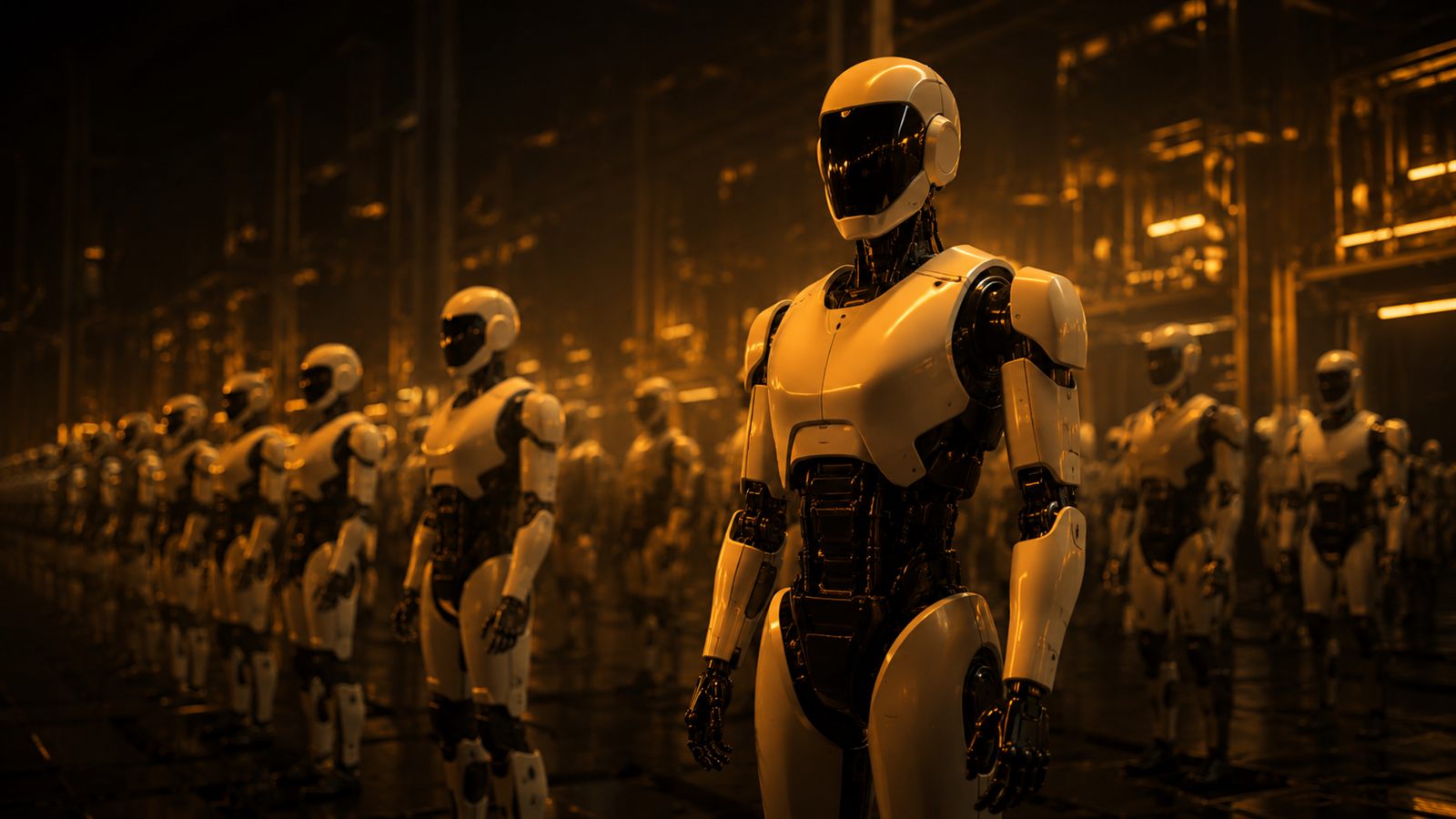
Since the start of the year, Tesla has dominated robotics headlines: a new generation of Optimus, dizzying production volumes, car factories being converted, « biomimetic » hands... It is hard to tell what is real engineering and what is just an announcement.
This article is a Bybotix reading of those announcements. The goal is not to sell a dream, but to help you understand where the sector really stands — and what you can actually do, today, if you want a humanoid robot in Europe.
What Tesla actually announced in 2026
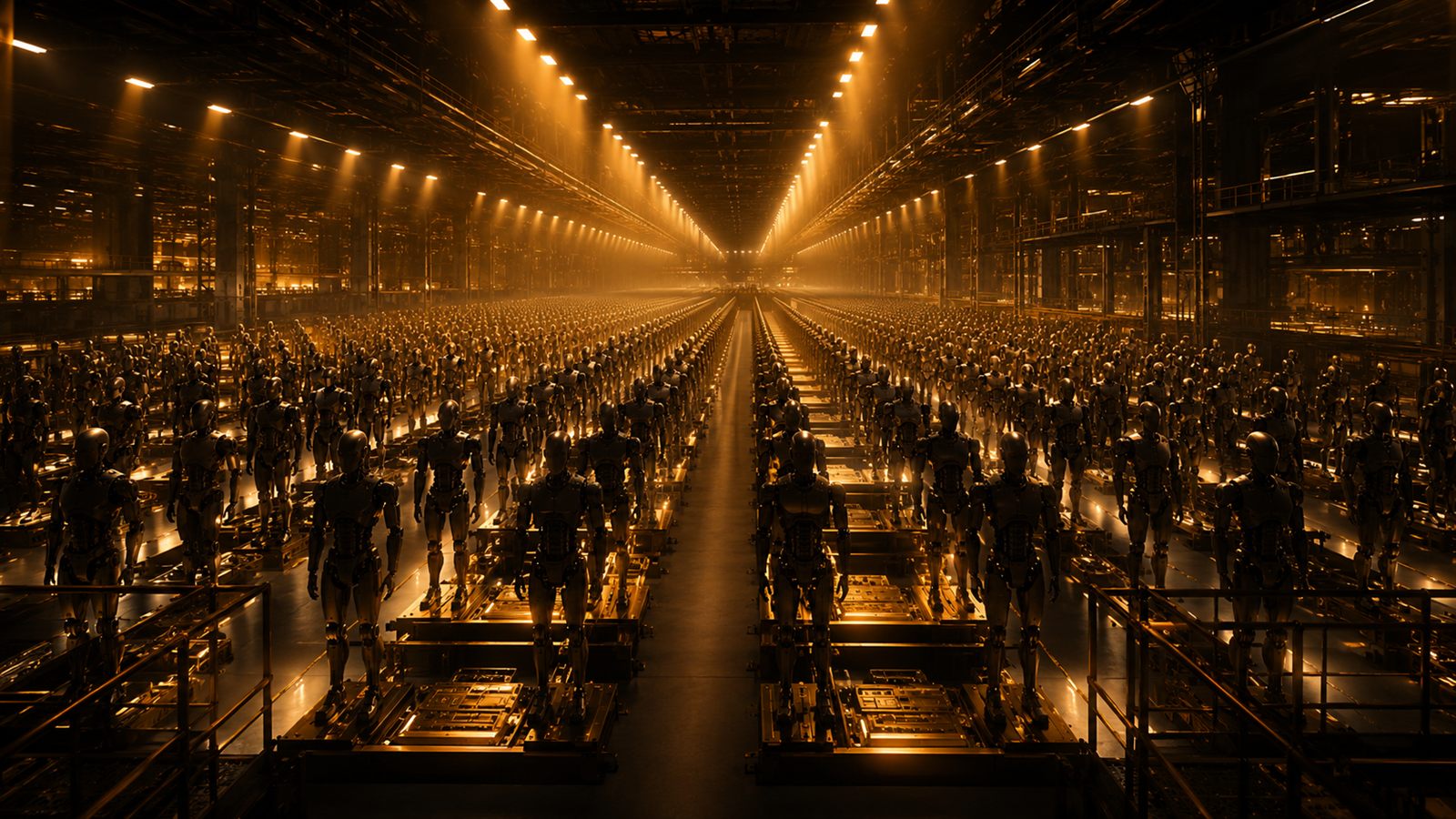
At the Abundance Summit on 12 March 2026, Elon Musk described Optimus 3 (the third generation) as being in its « final stages » of development. The stated timeline: a public reveal expected in the summer of 2026, with production starting shortly after at the Fremont factory in California.
The volume figures are staggering. Tesla is targeting roughly 50,000 to 100,000 units in the first year, with the ambition of reaching a run rate of one million robots per year at Fremont, then ten million per year at a future mega-site in Texas in 2027.
Important: these are targets announced by the manufacturer (vendor claims), not actual output. Musk himself warned that the ramp would be « slow » and « literally impossible to predict », partly because Optimus has nearly 10,000 unique parts. In practice, Tesla talks about deploying a few thousand units by the end of 2026 — inside its own factories, not at customers' sites.
« Reusing EV lines »: what's true, what's overstated
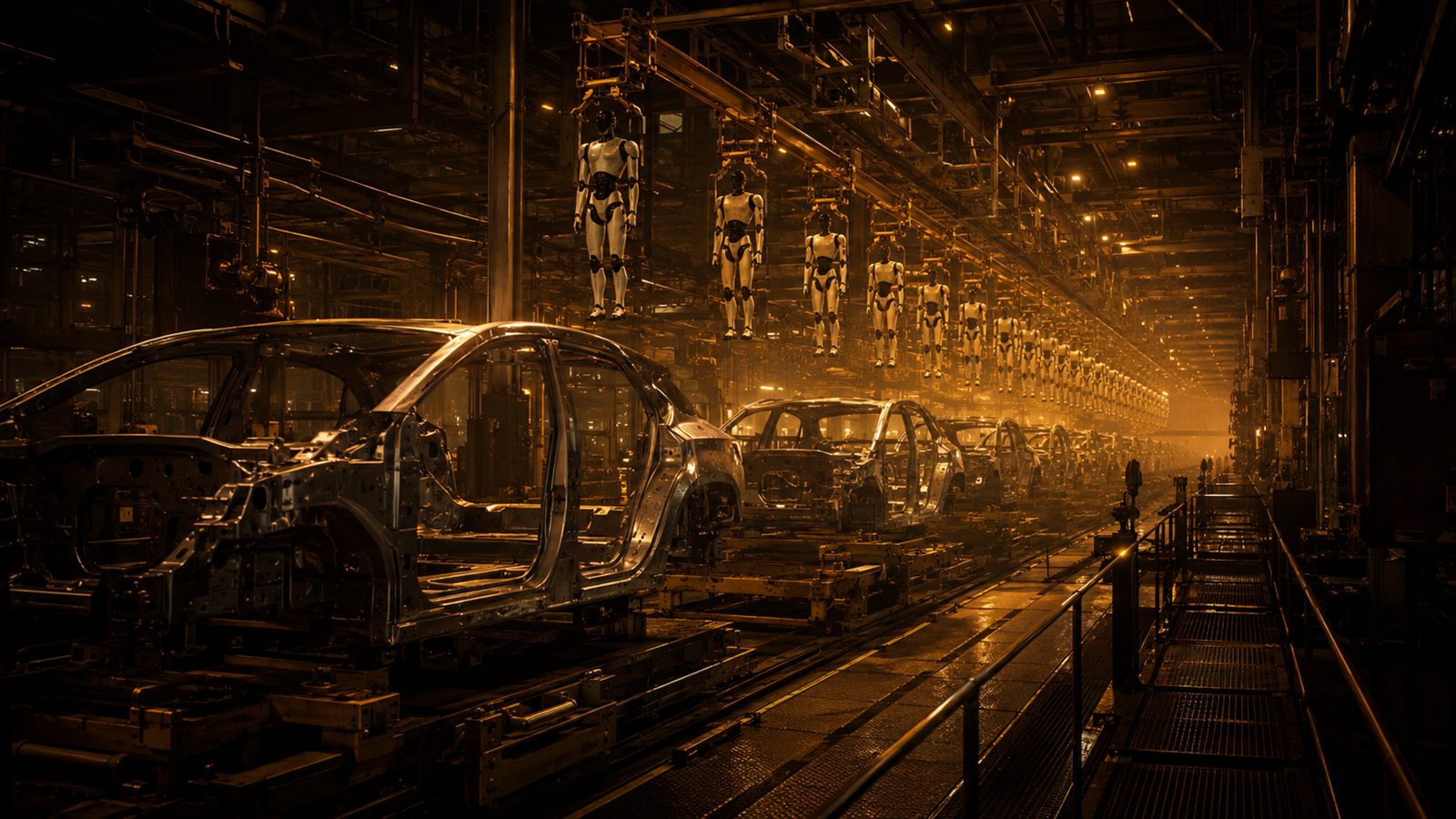
The last Model S and Model X rolled off the Fremont line in early May 2026. That freed-up line is meant to host Optimus production — hence the widespread idea that Tesla is « recycling » its electric-car lines to build robots.
It's partly true, partly misleading. A humanoid and a sedan have almost nothing in common in assembly terms: Optimus means a new line, new tooling, 10,000 brand-new parts. What Tesla really reuses is not the physical line, it's capabilities:
- expertise in motors and actuators from electric drivetrains;
- batteries and power electronics;
- artificial intelligence: Optimus shares the vision architecture and neural networks of Tesla's self-driving stack (FSD), and reportedly runs on the new in-house AI5 chip;
- an industrial culture built around very high-volume manufacturing.
This is where Tesla has a genuine edge: few players know how to build motors and electronics at a scale of millions of units. But « knowing how to make cars » is not the same as « knowing how to make robot hands ». And that is precisely where everything is decided.
The hand: 60% of the difficulty, and the key to reading the whole sector
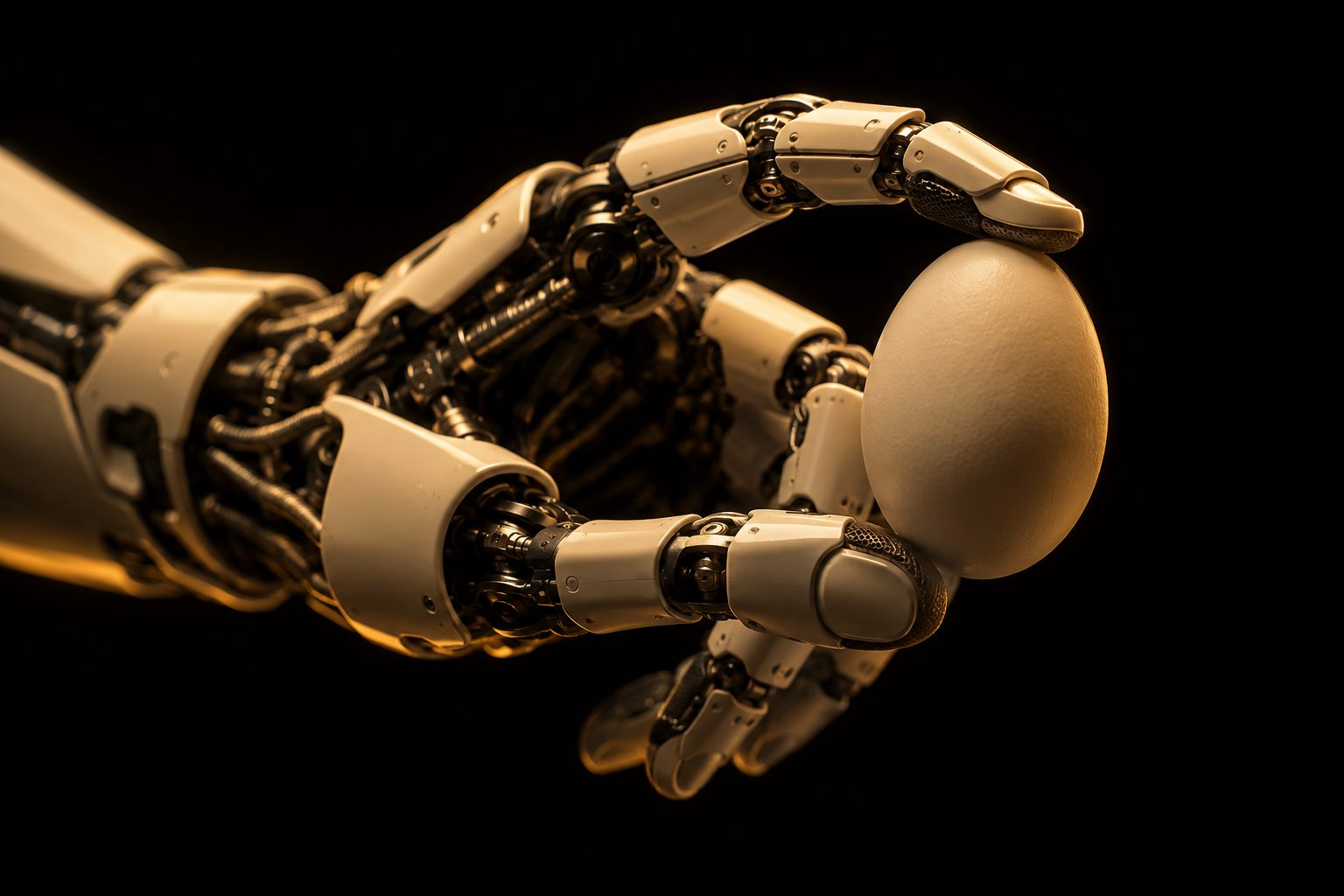
If there is one thing to remember about the new generation, it's the hand. Optimus 3 moves to 22 degrees of freedom per hand (double the previous generation), for a total of around fifty actuators across both hands. The motors are moved up into the forearm, and the hand is driven by a tendon system, much like a human hand. Each finger moves along four axes; the wrist adds two more.
Crucially, the fingertips carry tactile sensors that measure grip force. In theory, that's what lets the robot pick up an egg or a glass vial without crushing it.
Elon Musk has said it repeatedly: the hand represents « the majority of the engineering difficulty » of Optimus — about 60% of the whole challenge, harder to design than the Cybertruck.
And that is exactly the lens to keep in mind for the entire sector. Making a bipedal robot walk is now a largely solved problem. Making it manipulate the real world with finesse is not. When a manufacturer posts a video, the real question is not « does it walk? » but « does it handle varied objects, without teleoperation, repeatably? ». Fine dexterity remains the true bottleneck of humanoid robotics.
The Bybotix reading: announcement ≠ commercialization ≠ availability in Europe
Here is the key point, and it's the whole job of an observatory like Bybotix: Optimus is not a product you can buy. Tesla is aiming it first at its own factories. There is no firm consumer price, no distribution channel in Europe, no warranty or after-sales support for a third-party buyer.
Meanwhile, the robots that actually ship by the thousand in 2026 are not American, they're Chinese. Unitree delivered more than 5,500 humanoids in 2025 and is targeting 10,000 to 20,000 this year. AgiBot built its 10,000th robot as early as March 2026. Together they account for nearly 80% of global volumes, and several analysts (including Morgan Stanley) expect a sharp acceleration in 2026.
In other words: Tesla validates the thesis that humanoids are arriving at volume — it's an excellent barometer of how serious the sector has become. But Tesla is not, today, your concrete way in.
So what can you actually get in Europe today?
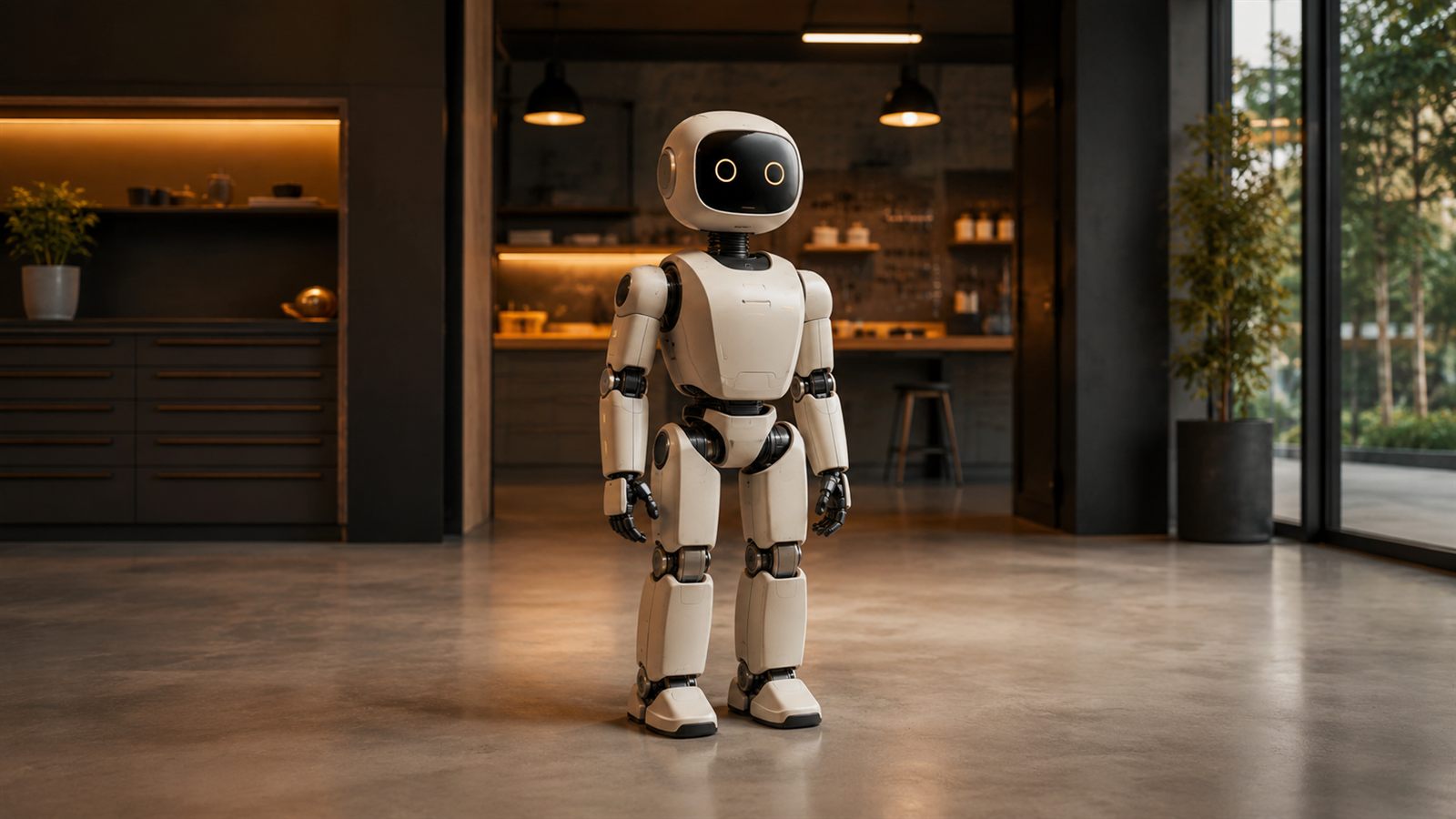
The most accessible humanoid is still the Unitree G1, visible and commercialized, listed at around $16,000 in its base configuration (more for the EDU version). It can be found at a few European distributors for roughly €23,000.
But — and this is exactly the Bybotix reflex — « visible and commercialized » does not mean « easy to buy and operate in Europe ». Before paying, several things must be checked case by case: the exact configuration, conformity documentation, warranty, the repair path and parts availability. We promise neither stock, nor CE conformity, nor after-sales support until it has been qualified for a specific model.
The checklist before dreaming of a humanoid
- Is it just an announcement, a demo, or a genuinely commercialized product?
- Is there a purchase channel in Europe, or do you have to import from China (handling customs, VAT and conformity yourself)?
- Who answers if the robot breaks down: warranty, parts, support?
- Does the demo show fine manipulation, or only walking and poses?
- Is the listed price complete (shipping, customs, VAT, essential accessories)?
The Bybotix takeaway
Optimus is fascinating to follow: it's probably the best indicator of how fast the humanoid industry is taking shape. Tesla's promised volumes, the conversion of car factories and the obsession with the hand all tell the same story — a sector moving from the lab to mass production.
But an announcement, however spectacular, is not a robot delivered to your door with a European warranty. The role of Bybotix is precisely to do that sorting: separate the noise from the real, and point you toward what is genuinely accessible today.
Want to follow the models that are actually available in Europe? Browse our robot profiles, sign up for our market watch, or simply ask us your question.