
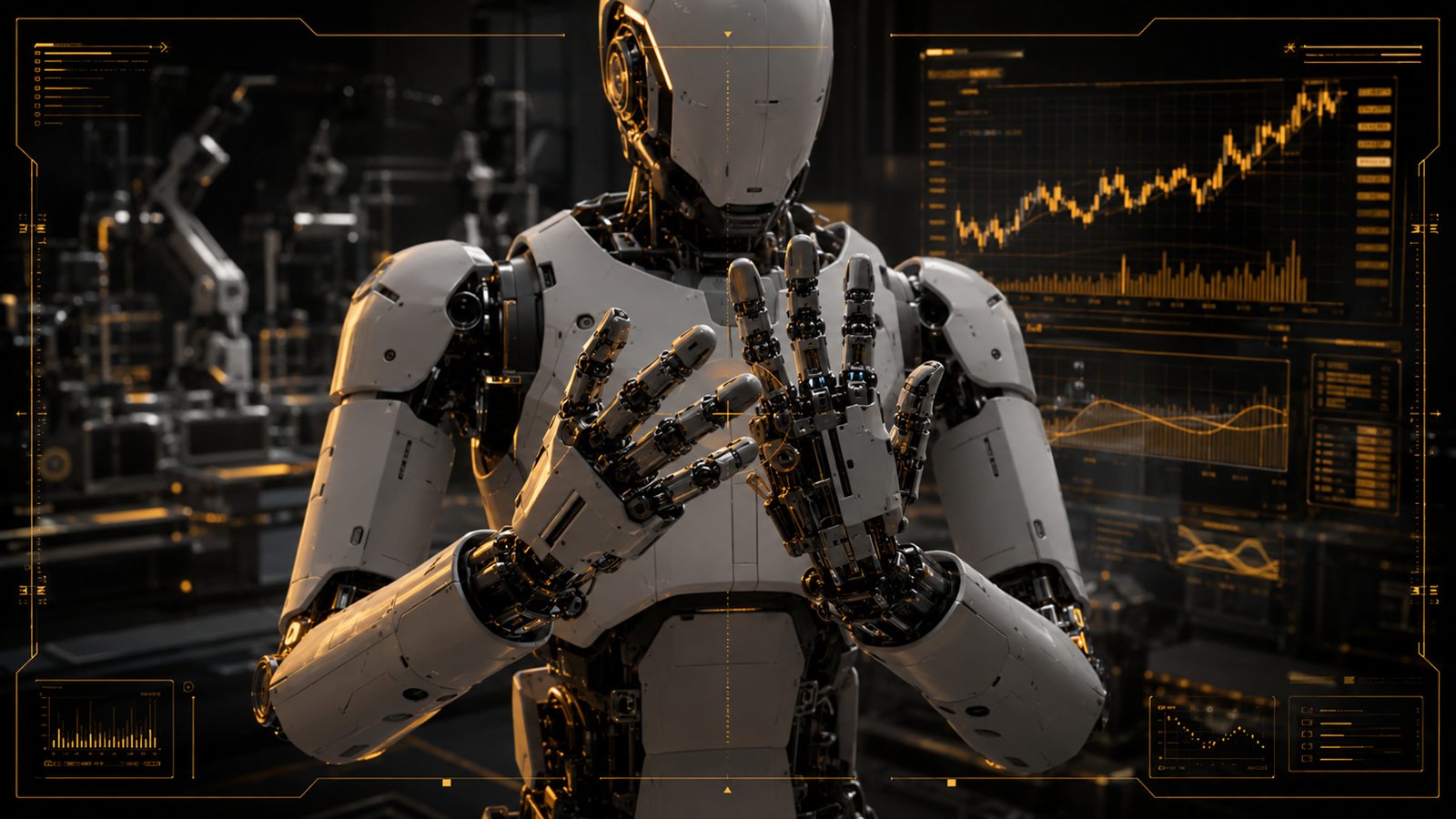
Unitree Robotics has just achieved a rare milestone in the humanoid robotics sector: its IPO on Shanghai's STAR Market was approved on June 1, 2026, with a fundraising target of around 4.2 billion yuan, or approximately 620 million dollars. This is a major signal: Unitree is no longer just a manufacturer showcased in slick demonstration videos, but an industrial company recognized by a public financial market, with solid revenues, a proven product line, and structured investment capability.
At Bybotix, we classify Unitree's lineup at Level 5 of maturity: Commercialized / Available on our unique scale, particularly for the Unitree G1, a standard development humanoid robot already offered within a transparent commercial framework. Unlike many other players, Unitree actually sells machines, publishes prices, and delivers working platforms to laboratories and system integrators.
Why Unitree is the Strongest Player in the Market Today
The humanoid market is crowded and noisy. Many announcements mix prototypes, controlled marketing videos, private funding rounds, and promises of future autonomy. Unitree stands out on three concrete criteria:
- Available Products: The G1 is a commercialized platform, not just a pilot project.
- Clear Pricing: The entry-level R1/R1 Air starts at a few thousand dollars, the G1 is priced around $16,000, and heavy-duty research platforms scale up to $650,000 for the GD01.
- Strengthened Capital: The IPO provides industrial-scale capital for R&D, manufacturing scale-up, and embodied AI software development.
This does not mean that Unitree humanoids can replace human operators in factories today. That would be false. It means Unitree has passed the hurdle that most competitors are still facing: actual sales, an active install base, transparent pricing, a manufacturing roadmap, and public market financing.
The NVIDIA + Unitree + Sharpa Alliance: Why It Matters
NVIDIA introduced the Isaac GR00T Reference Humanoid, built on Unitree’s new H2 Plus humanoid frame, featuring Jetson Thor onboard compute, Isaac GR00T software stack, and Sharpa Wave tactile hands. NVIDIA describes this platform as a reference design meant to accelerate academic research and real-world physical skill development. The H2 Plus stands at 1.8m, weighs around 68 kg, and features 31 degrees of freedom for the entire body.
The key takeaway is the complete hardware-software integration:
- Unitree delivers the humanoid frame;
- Sharpa provides the tactile five-finger hands;
- NVIDIA integrates compute, models, and the simulation/learning software stack.
Sharpa Hands: Unlocking the Real Bottleneck
In many humanoid designs, dynamic walking is impressive, but hands remain the limiting factor. Walking, recovering balance, or performing a dance routine creates great PR. But to actually work in a shop, lab, or maintenance facility, a robot must manipulate. This is where Sharpa hands change the equation.
The specs for Sharpa Wave hands range between 22 and 25 degrees of freedom (DoF) per hand. The industrial goal remains the same: increasing fine motor skills and tactile sensing. A highly mobile hand is useless without robust tactile sensors and a clean software stack, but if integration succeeds, the main bottleneck of humanoids — fine manipulation — is finally solved.
A Range Covering the Entire Spectrum
Unitree's diversification is also a strong industrial sign. The company is not relying on a single, expensive hero robot. It is structuring a coherent commercial funnel:
- R1 / R1 Air: A lightweight study model (~25 kg) with a very low entry price for universities and individual developers;
- G1: A standard development platform, highly accessible to R&D teams and integrators;
- H2 Plus: A full-size humanoid frame dedicated to advanced reference research;
- GD01: A premium, heavy-duty research robot reserved for highly advanced enterprise projects.
Bybotix's Take: Solid, but Not Magic
Our analysis remains intentionally sober. Unitree is currently one of the most credible players because it ticks the boxes we prioritize: availability, pricing, structured range, and stable funding. The Shanghai IPO reinforces this lead. The alliance with NVIDIA and Sharpa adds serious technical backing for embodied AI and fine manipulation. However, we must not mistake an available platform for a fully autonomous worker. The G1 and H2 Plus remain research tools.