
Unitree G1 — specifications, versions and availability
G1 is a compact humanoid for demonstrations and research. To develop your own applications, look at G1 EDU.
View the images ↓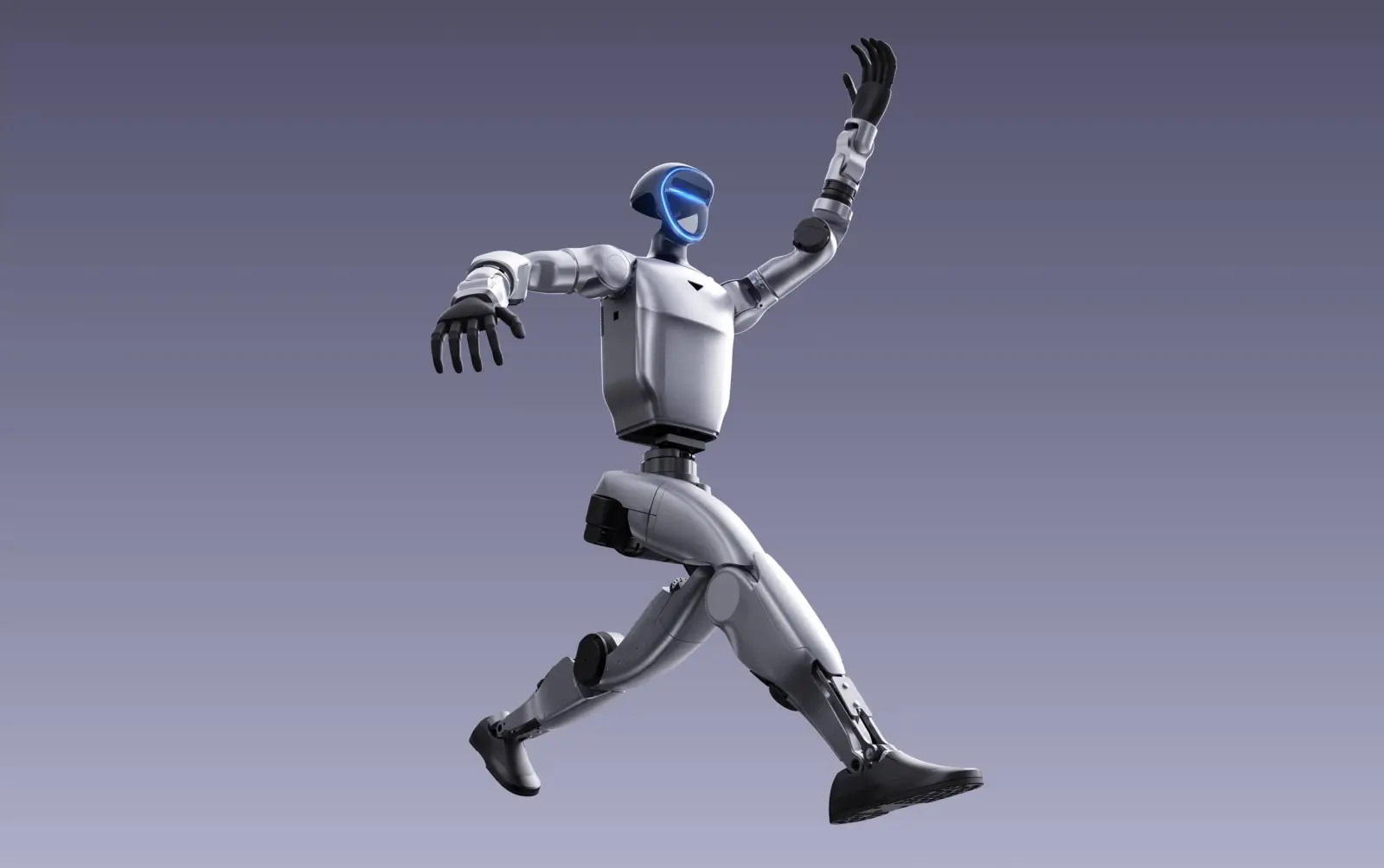 Enlarge ↗
Official G1 render. The displayed hands are not included in every configuration.
Unitree Robotics · Source ↗From information to action
What changed
Monitoring started on 9 September 2026. Future changes will appear here after editorial review.
A closer look
Understand the robot in images
Open a view to inspect it. Captions distinguish equipment, variants and demonstrations.
 Enlarge ↗
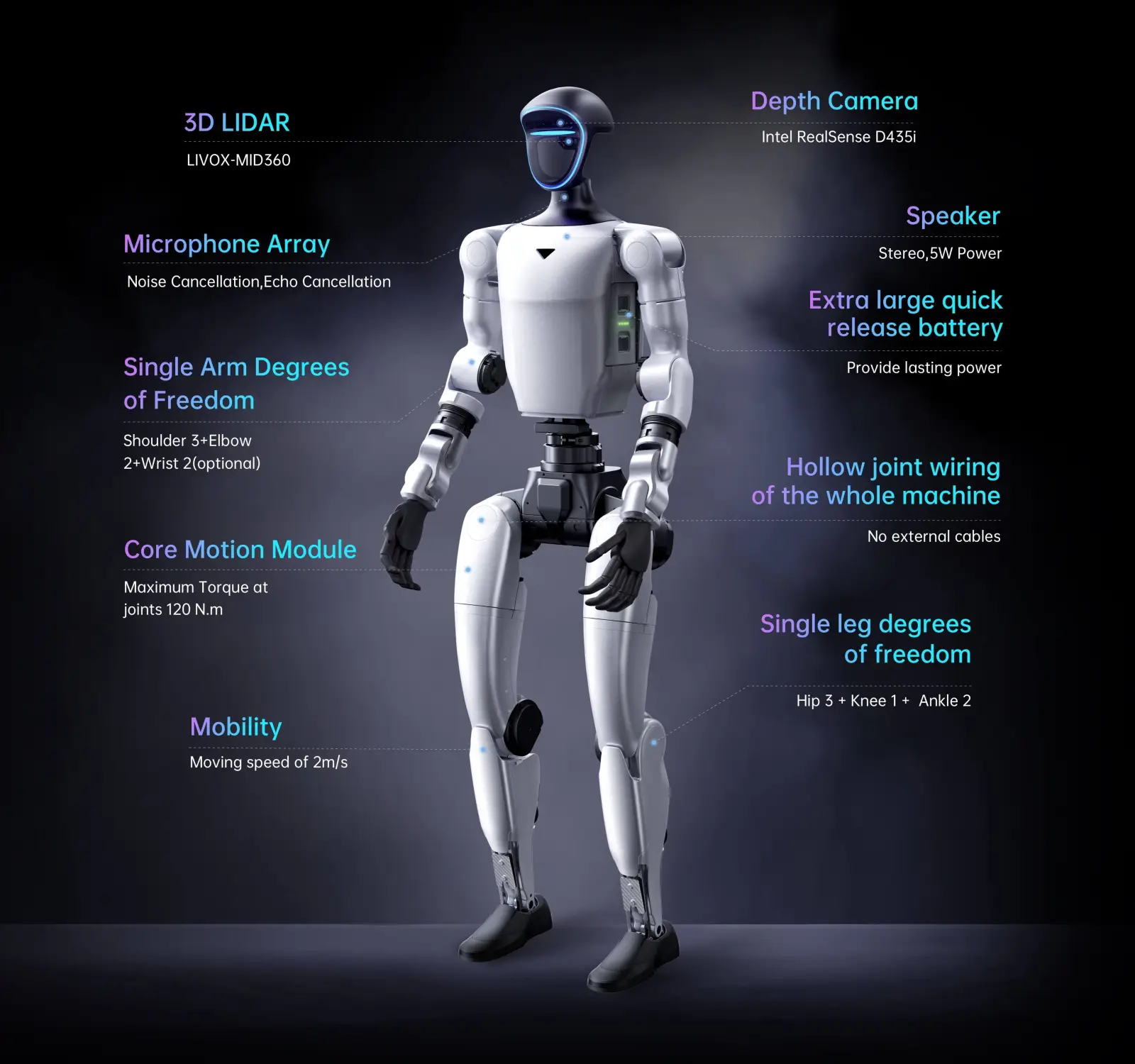
Sensors and joints
The diagram locates LiDAR, depth camera, microphones and battery. Illustrated wrists and hands depend on EDU options and should not be attributed to the standard G1.
Unitree Robotics · View source ↗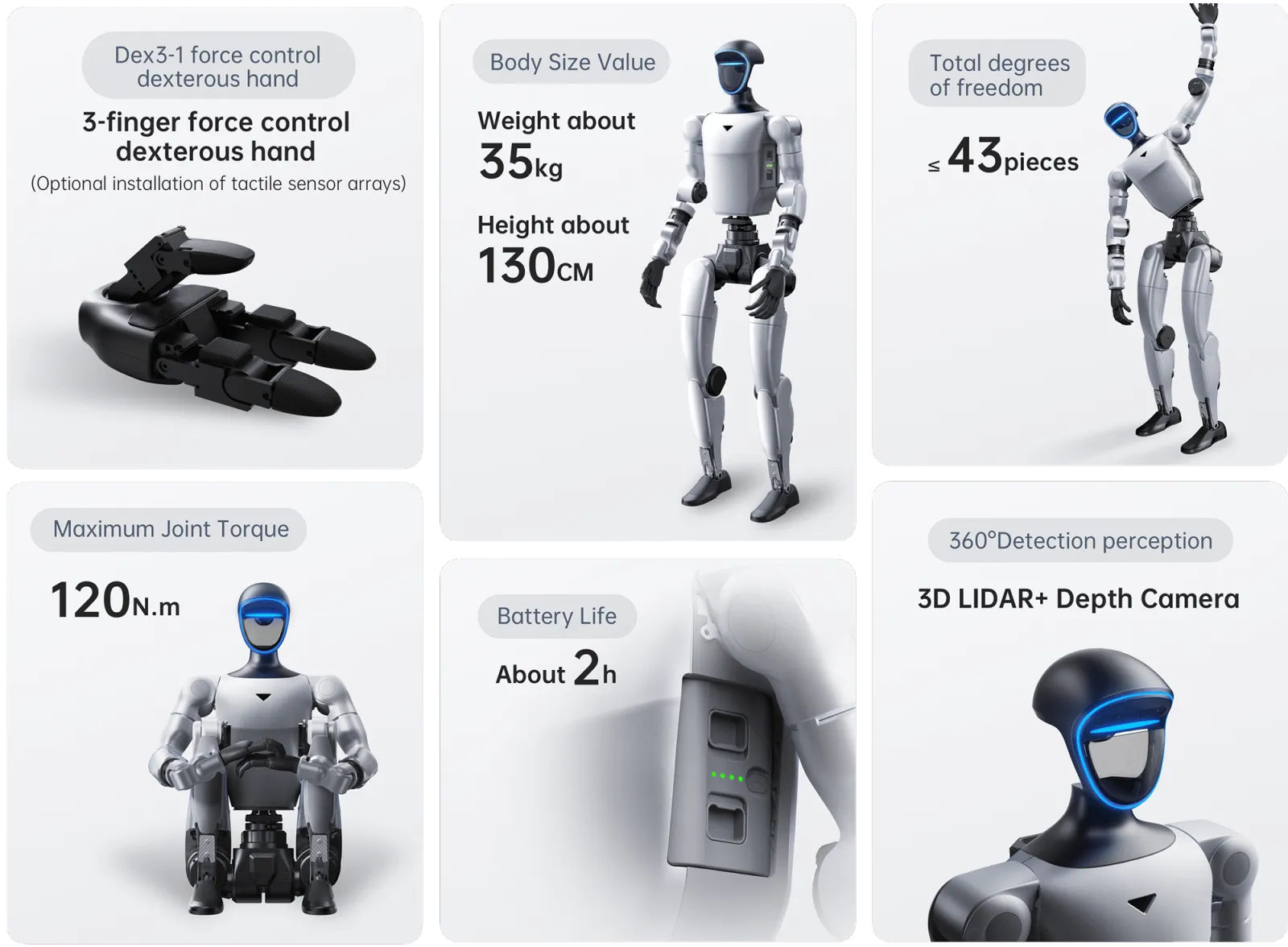 Enlarge ↗
Size, folding and grasping
Overview of the 1.30 m body, folding and three-finger Dex3-1 hand. The maximum 43 joints refers to an equipped configuration, not the 23-joint standard model.
Unitree Robotics · View source ↗Sources
Information from the sources below, checked on 10 September 2026. We have not tested this robot.
G1 or G1 EDU?
Software access is the main difference. Standard G1 and G1 EDU do not offer the same development options. For training or new behaviours, request an EDU quote with the hands and onboard compute you need.
Availability
- G1 is sold in several versions. Check European delivery times and warranty terms with the seller.
Before ordering
- Which SDK access is included?
- Does the quote include the hands and compute module you need?
Things to know
- Advertised performance varies with equipment and operating conditions.
- Before using it unattended, check which tasks the robot can actually complete on its own.
Warranty and repairs
Who provides after-sales service?
Check with the sellerBefore ordering, ask who will repair the robot, where parts should be sent and how long repairs take. Clarify the warranty and available training.