
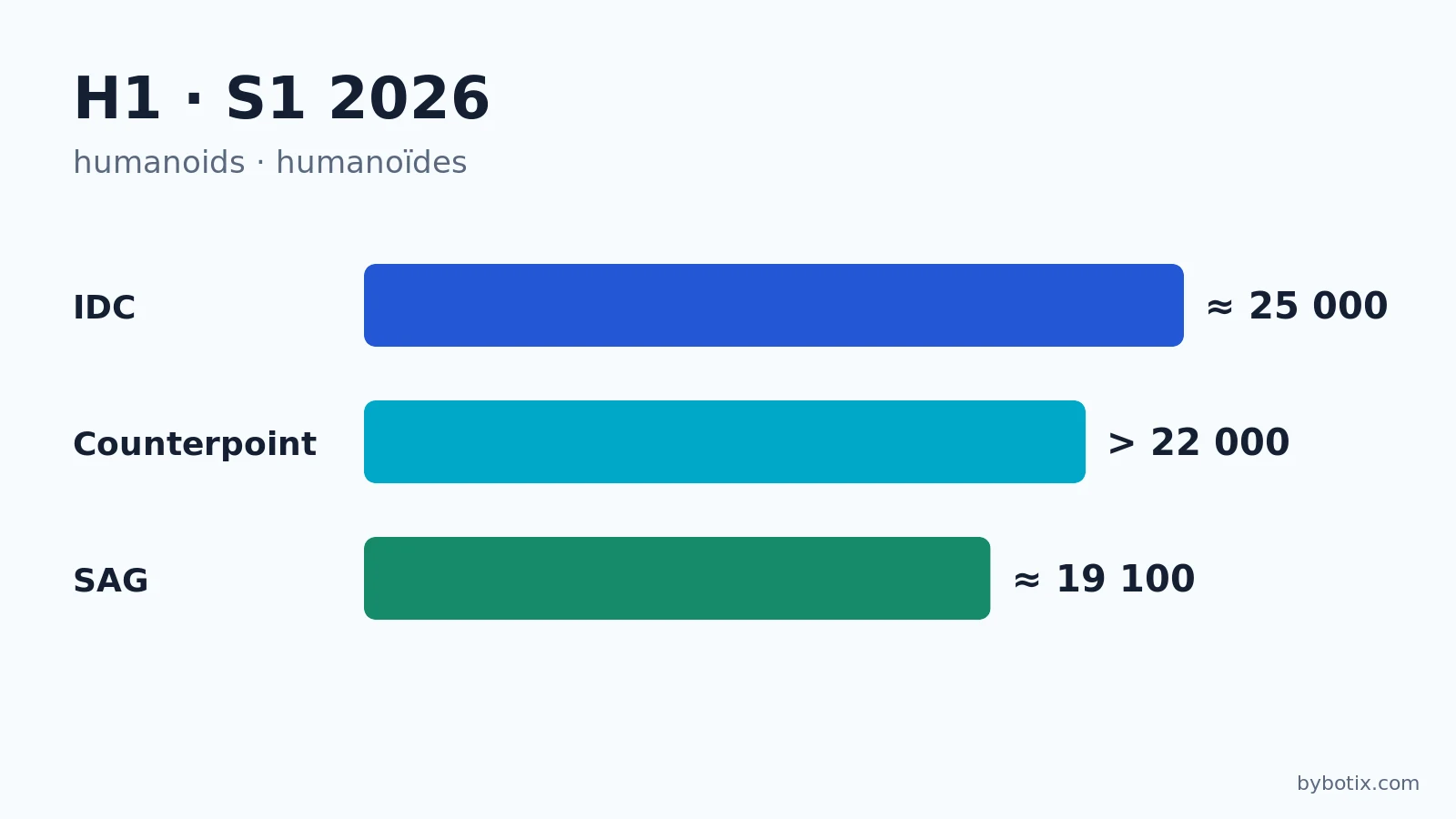
Research firm IDC estimates that nearly 25,000 humanoid robots were shipped worldwide in the first half of 2026, up 432% year on year. AgiBot leads with more than 8,600 units, about 35% of the total. IDC forecasts more than 750,000 shipments a year by 2030.
Three firms, three figures
This is not the only figure. Counterpoint Research counts more than 22,000 units, Smart Analytics Global about 19,100. The gap, nearly 6,000 robots, comes mainly from method: each firm has its own definition of a humanoid, counts shipments, sales or installations, and does not track the same manufacturers.
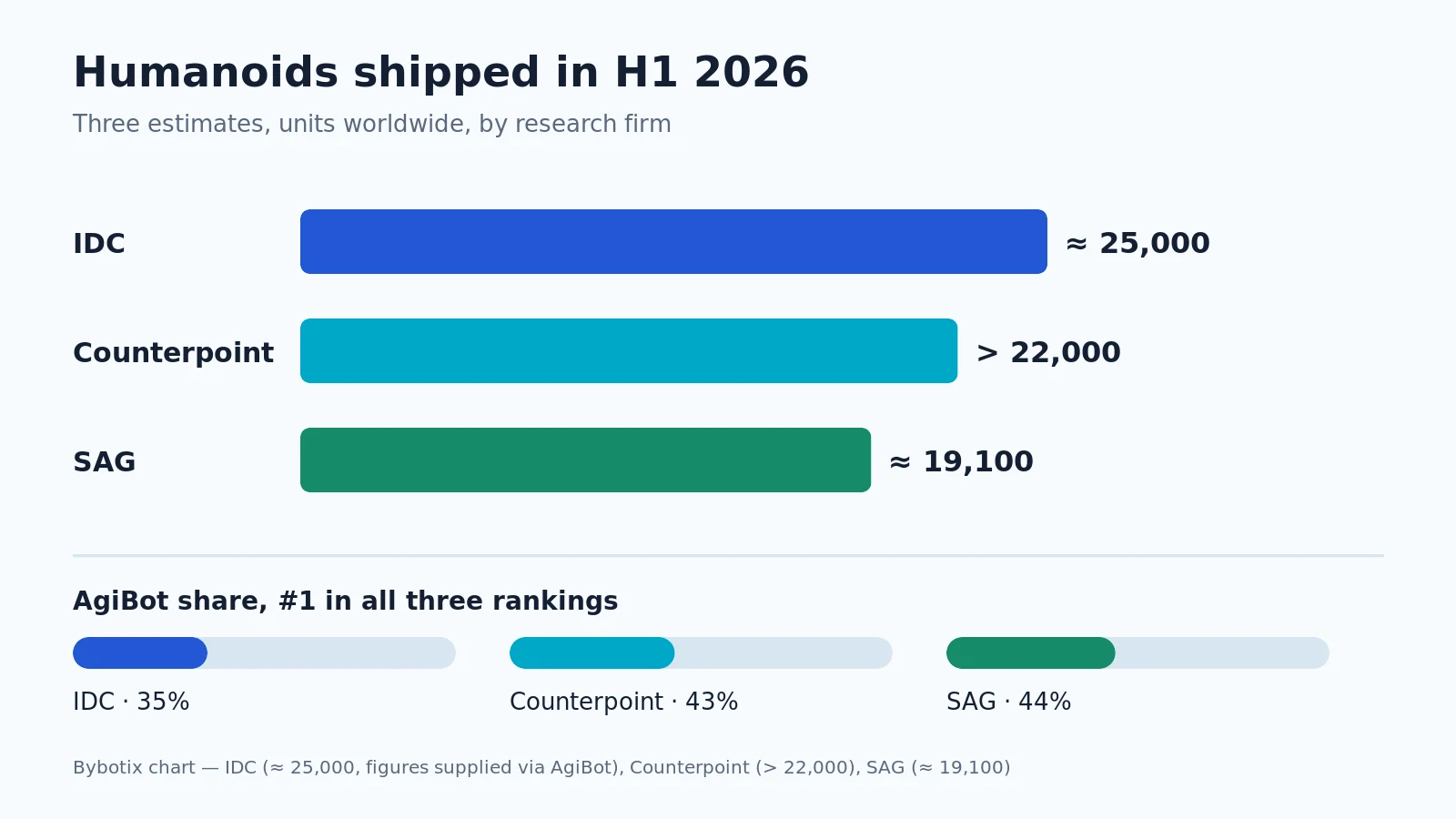
One caveat: the IDC figures were circulated to the press by AgiBot, their main beneficiary. That does not make them wrong, but they deserve cross-checking.
Where the estimates agree
- AgiBot is number one in all three rankings, with 35 to 44% of shipments depending on the firm.
- China dominates: according to IDC, more than 19,000 of the robots shipped, about 78%, were shipped in China.
- Growth is strong: between 3.7× and 5.3× in a year, depending on the estimate.
What these figures do not say
Twenty-five thousand robots in six months is a lot for a sector that shipped a few thousand a year earlier. But a shipment does not say how the robot is used. Many of these humanoids serve research, education, reception or demonstrations rather than productive factory work. Forecasts for 2030 remain projections, not order books.
Our view: the market is changing scale, and production is concentrating among a few Chinese manufacturers. For a European buyer, this is good news for prices and availability. It is also a reason to check local support, spare parts, CE conformity and software access before choosing.
Explore the AgiBot X2 profile, the AgiBot A3 Ultra profile, the Unitree G1 profile and our take on the Unitree H2-X.
Charts: Bybotix, based on figures published by IDC, Counterpoint Research and Smart Analytics Global. X2 visual: AgiBot.