
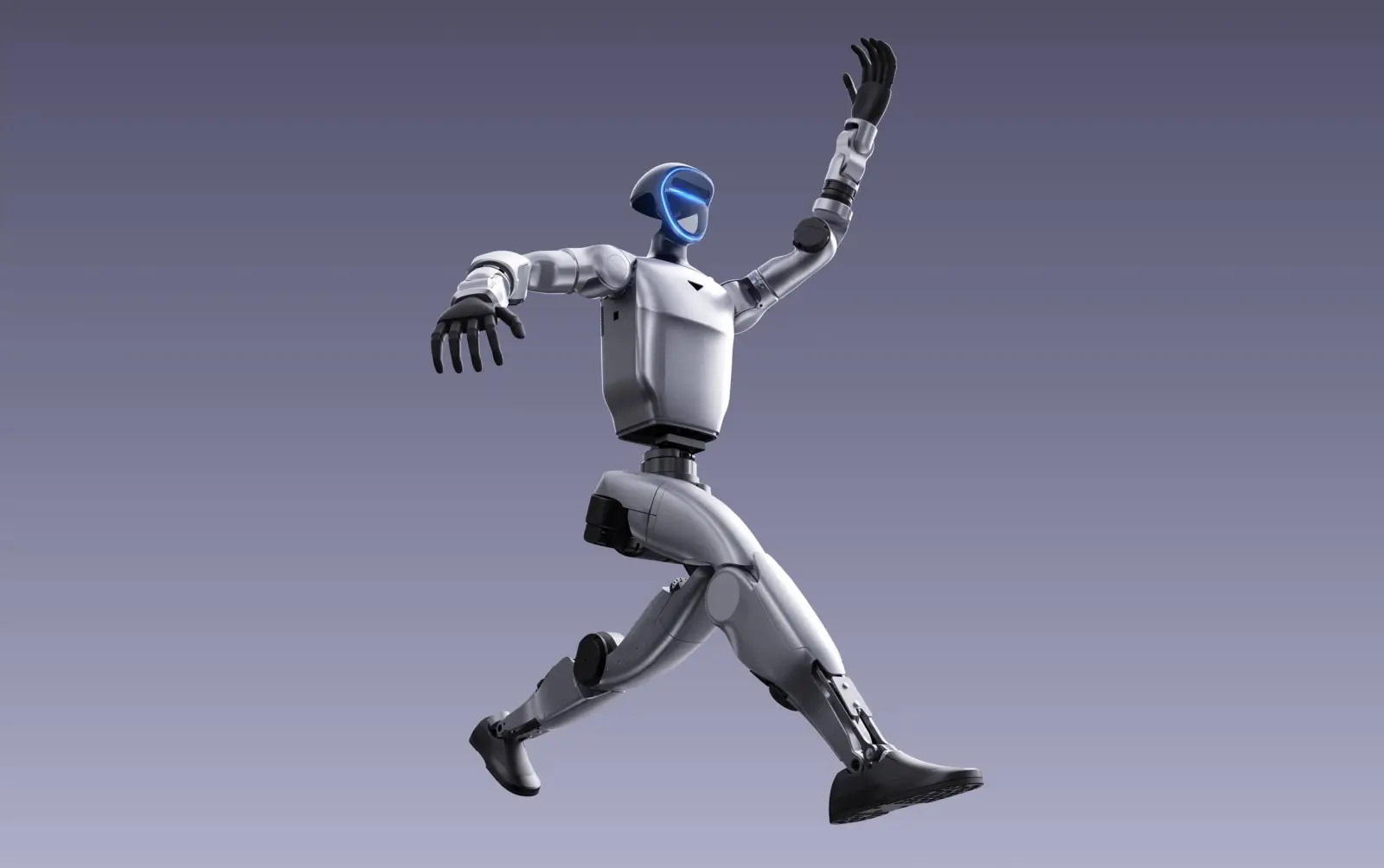
In a post published on 25 September 2026, LeRobot contributors present a workflow connecting teleoperation, data and learning on Unitree G1. Their setup adds grippers, cameras and communication hardware. This is research using a specially equipped robot, not a new feature delivered with every G1.
Learning a task while staying balanced
A humanoid needs to do two things at once: choose a useful action and stabilise its body. OpenHLM research explores this separation between task learning and fast movement control. The distinction matters: understanding an instruction is not enough to execute a reliable whole-body action.
Tools for experiments, not a ready-made assistant
The LeRobot G1 documentation covers simulation, teleoperation, data collection and training. It describes a development environment and its dependencies. Access to code does not remove the need to prepare the hardware or validate the results.
For a research team, the opportunity is to follow an experiment from start to finish. Our advice: begin with a narrow task, keep failures in the dataset and define success criteria before training. Moving the same object several times does not yet establish robustness to different objects or a change of surroundings.
Before choosing a G1, check the edition
Unitree distinguishes standard G1 from G1 EDU and lists secondary development for EDU only in its comparison. Check the edition, software access, grippers and sensors required by the project. A video recorded with a laboratory setup does not describe the contents of a commercial package.
Our view: this is an interesting direction for laboratories already working on robot learning. For a first introduction to demonstration collection and tabletop manipulation, a development arm can be a simpler starting point to organise.
Explore the Unitree G1 profile and SO-101 simulation with MuJoCo Warp.
Image: official Unitree Robotics render identifying the platform. It does not show the experimental LeRobot setup; hands depend on the configuration. Bybotix has not reproduced these experiments.